# What Are AI Outbound Campaigns and How Do They Work?
How can businesses reach more prospects without asking sales teams to spend hours researching leads, dialing numbers, and repeating the same follow-up tasks? This is where ***[AI Outbound Campaigns](https://callified.ai/blog/why-ai-outbound-campaigns-fail/)*** come into play. They combine artificial intelligence, automation, customer data, and communication workflows to help businesses proactively contact potential customers at scale.
In simple terms, an AI-powered outbound campaign uses technology to identify prospects, personalize outreach, initiate conversations, qualify responses, and trigger follow-ups based on predefined goals. Instead of treating every contact the same way, AI can use available data and conversation signals to make outreach more relevant and responsive.
**What Is an AI-Powered Outbound Campaign?**
An AI-powered outbound campaign is a structured outreach process where artificial intelligence assists with contacting potential customers rather than relying entirely on manual sales activities.
Depending on the platform and campaign setup, AI can support tasks such as:
* Finding and organizing potential prospects
* Segmenting contacts according to specific criteria
* Creating personalized messaging
* Making automated phone calls
* Sending follow-up communications
* Asking qualification questions
* Recording conversation details
* Updating customer records
* Scheduling follow-up actions
The objective is not simply to contact more people. A well-designed campaign aims to make every interaction more timely, consistent, and relevant.
**How Does AI Outbound Outreach Work?**
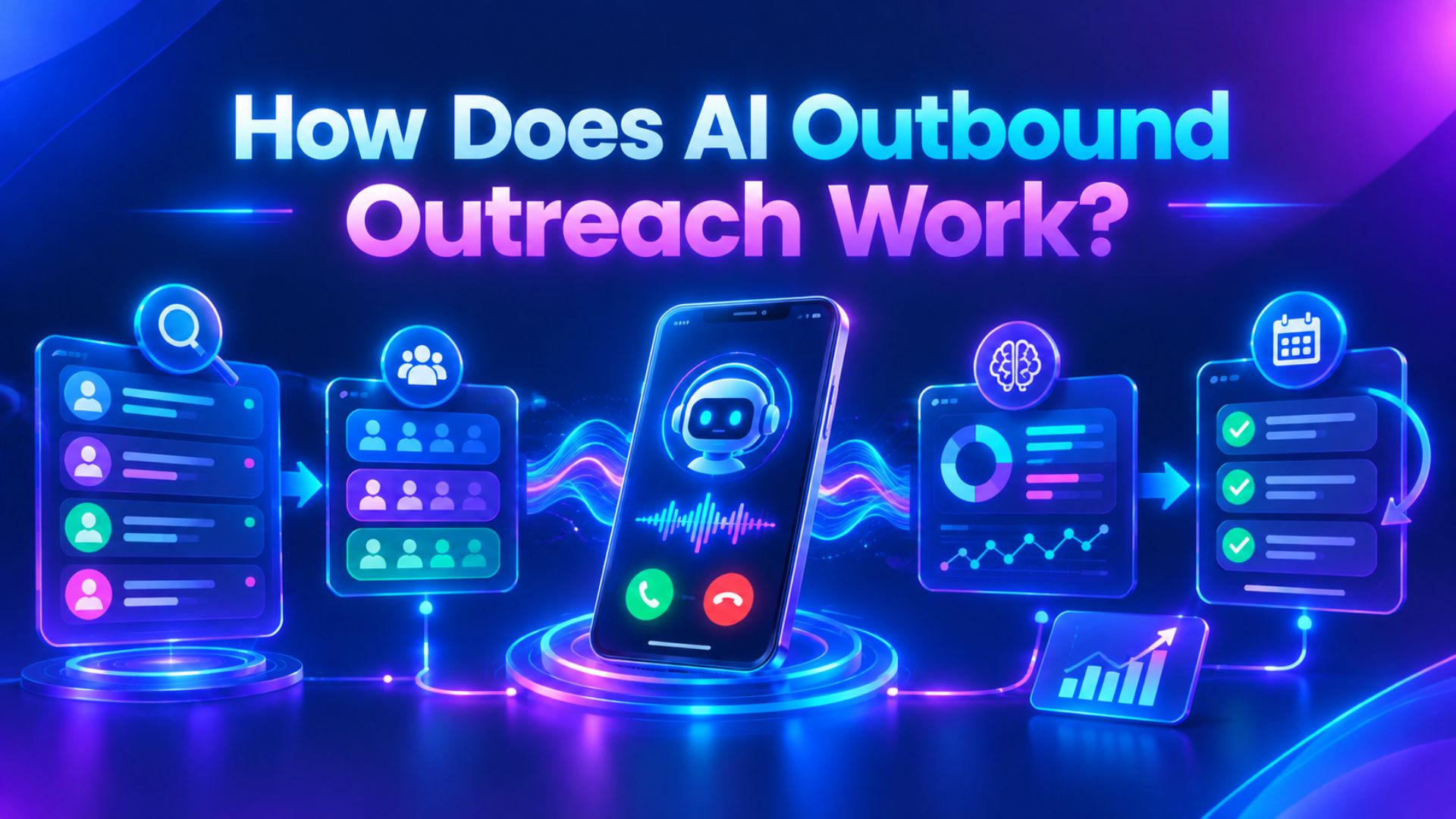
Although implementation varies between businesses, most automated outbound workflows follow a similar process.
**Define the Campaign Objective**
The first step is deciding what the campaign should accomplish. A business might want to generate appointments, qualify prospects, promote a service, reactivate old leads, or conduct customer research.
Clear objectives help determine the audience, messaging, questions, and success metrics.
**Select and Segment Prospects**
AI systems can work with customer databases, CRM records, lead lists, or other approved data sources. Prospects can then be organized according to characteristics such as industry, location, company size, previous interactions, or expressed interest.
Segmentation allows businesses to create different communication paths instead of sending identical messages to everyone.
**Build the Conversation Workflow**
The campaign needs a defined conversation structure. This may include an introduction, qualifying questions, responses to common objections, and specific next steps.
AI can help manage variations within these conversations. For example, if a prospect indicates interest, the workflow can move toward appointment scheduling. If the prospect is not ready, the system can place them into a later follow-up sequence.
**Start Automated Outreach**
Once the workflow is configured, the system can begin contacting selected prospects. Depending on the technology being used, this may involve AI phone calls, emails, text messages, or multiple communication channels.
For businesses focused on ***[outbound sales](https://callified.ai/blog/what-is-outbound-sales-and-how-does-it-work/)***, automation can reduce repetitive work while allowing sales representatives to concentrate on conversations that require human involvement.
**Analyze Responses and Take Action**
One major advantage of AI-driven outreach is its ability to process information from interactions.
The system can identify signals such as:
* Positive or negative interest
* Questions from prospects
* Qualification responses
* Requests for additional information
* Preferred follow-up times
* Appointment opportunities
These signals can determine what happens next in the workflow.
**What Role Does AI Play in Campaign Personalization?**
Traditional automation often follows rigid rules. AI can make workflows more adaptive by using contextual information to adjust communication.
For example, two prospects may receive different messaging because their industries, previous interactions, or stated requirements are different. AI can also help summarize conversations and identify important information for sales representatives.
Personalization does not mean creating completely different campaigns for every prospect. Instead, it means using available information to make automated interactions more context-aware.
**How Can Businesses Use AI Outbound Campaigns?**
There are many practical applications across industries. Common use cases include:
**Lead Qualification**
AI can ask predefined questions and determine whether a prospect meets specific qualification criteria. Qualified contacts can then be transferred to sales representatives or routed toward an appointment.
**Appointment Setting**
Automated outreach can identify interested prospects and help move them toward scheduling a meeting or consultation.
**Follow-Up Campaigns**
Businesses often lose opportunities because prospects are contacted once and then forgotten. Automated workflows can maintain consistent follow-up based on predefined timing and responses.
**Re-Engagement**
Older leads can be contacted again to determine whether their needs have changed. This can help businesses make better use of existing customer data.
**Customer Surveys**
AI can conduct structured conversations to gather feedback, understand customer preferences, or measure satisfaction.
**What Are the Benefits of AI-Driven Outbound Campaigns?**
When implemented properly, AI automation can provide several operational benefits.
* Greater scalability: Businesses can manage larger outreach volumes without increasing manual workload at the same rate.
* Consistent communication: Campaign rules help maintain a standardized experience across interactions.
* Faster response times: Automated workflows can initiate or continue conversations without waiting for a salesperson to become available.
* Better productivity: Sales teams can spend more time handling qualified opportunities instead of completing repetitive administrative tasks.
* Improved data capture: Conversation outcomes and prospect information can be recorded systematically for future actions.
For companies building a modern ***[lead generation business](https://6a460ca630e75.site123.me/blog/how-to-start-a-successful-lead-generation-business-in-2026)***, these capabilities can also make it easier to create repeatable outreach processes and measure campaign performance.
**What Should Businesses Track?**
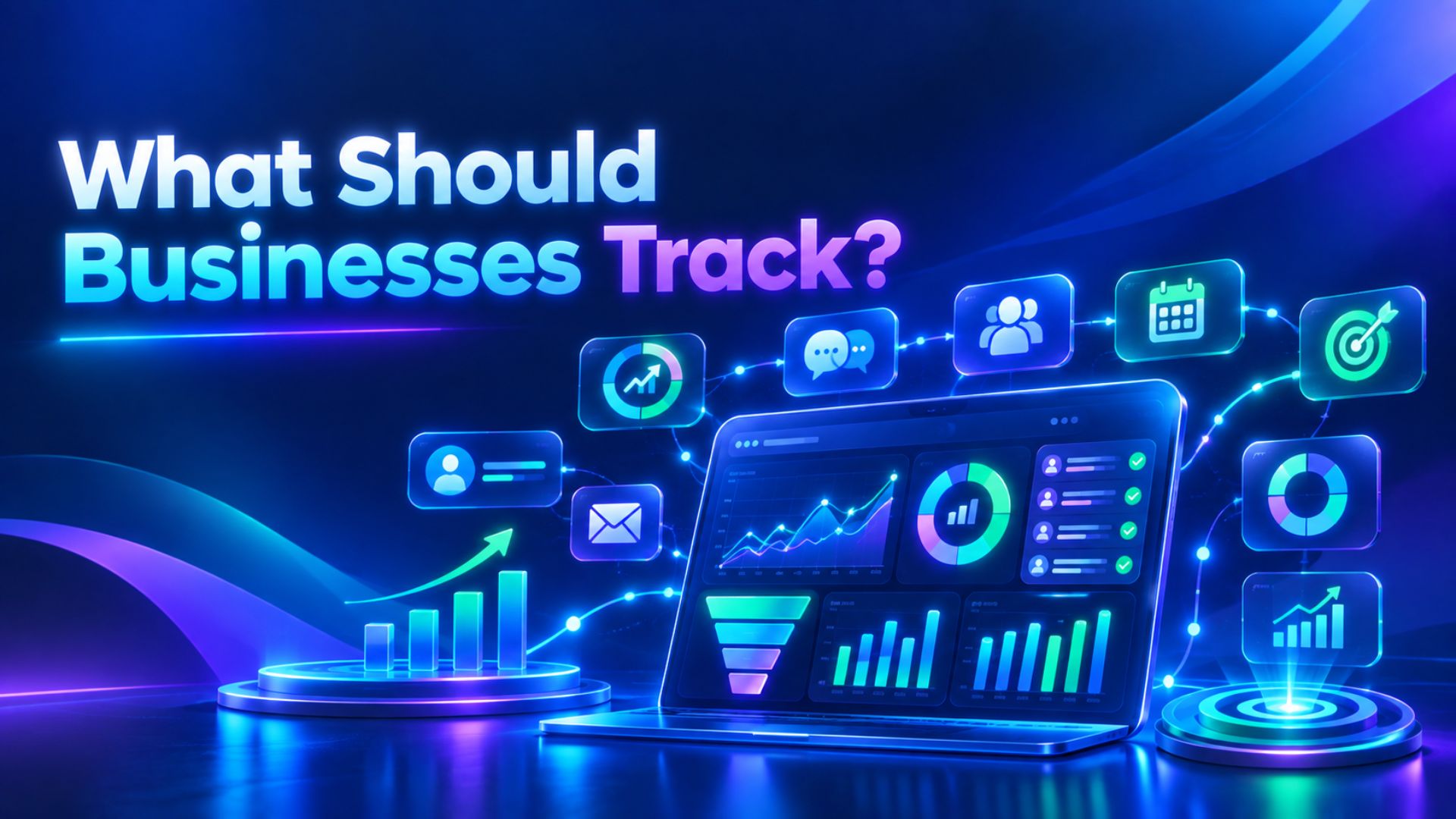
Launching an automated campaign is only the beginning. Performance should be monitored using measurable indicators such as:
* Contact rate
* Response rate
* Qualification rate
* Appointment rate
* Conversion rate
* Follow-up completion
* Cost per qualified opportunity
* Revenue generated from the campaign
These metrics help identify where the campaign is working and where adjustments may be needed.
**How Can Businesses Get Started?**
A practical implementation process can be broken into five stages:
* Define the target audience and objective.
* Prepare accurate prospect and customer data.
* Create conversation scripts and decision paths.
* Connect the workflow with relevant CRM or business systems.
* Launch gradually, measure results, and optimize.
Platforms such as Callified AI can support businesses exploring AI-powered calling and automated outreach workflows as part of their broader sales and customer engagement processes.
Also watch this video - ***[Meet Callified AI | Your AI Sales Team That Never Sleeps](https://youtu.be/cQ8QsephGKI?si=zPMCc1XGaWJJboY2)***
**Conclusion**
***[AI Outbound Campaigns](https://callified.ai/blog/why-ai-outbound-campaigns-fail/)*** are changing how businesses approach proactive customer communication by combining automation with intelligent conversation workflows. From prospect qualification and appointment setting to follow-ups and data collection, these systems can reduce repetitive work while creating more structured outreach processes.
The strongest results come from treating AI as part of a broader customer engagement strategy rather than simply as a tool for increasing call volume. With clear objectives, useful data, thoughtful conversation design, and consistent performance measurement, businesses can build outbound workflows that are scalable, measurable, and increasingly responsive to prospect behavior.
**FAQs**
Q1. Are AI outbound campaigns fully automated?
Not necessarily. Businesses can automate repetitive interactions while involving human representatives when a conversation requires expertise, negotiation, or personal attention.
Q2. Can AI qualify leads?
Yes. AI can ask predefined qualification questions, interpret responses, and route prospects according to rules or campaign criteria.
Q3. Are AI campaigns suitable for small businesses?
They can be. Smaller companies may use automation to handle repetitive outreach and follow-ups without requiring a large sales operations team.
Q4. What is the most important factor in campaign success?
A clear objective and well-designed workflow are essential. Automation alone does not guarantee results; the campaign needs accurate data, relevant messaging, appropriate targeting, and ongoing optimization.