How Will Technology Shape the Future of Healthcare?
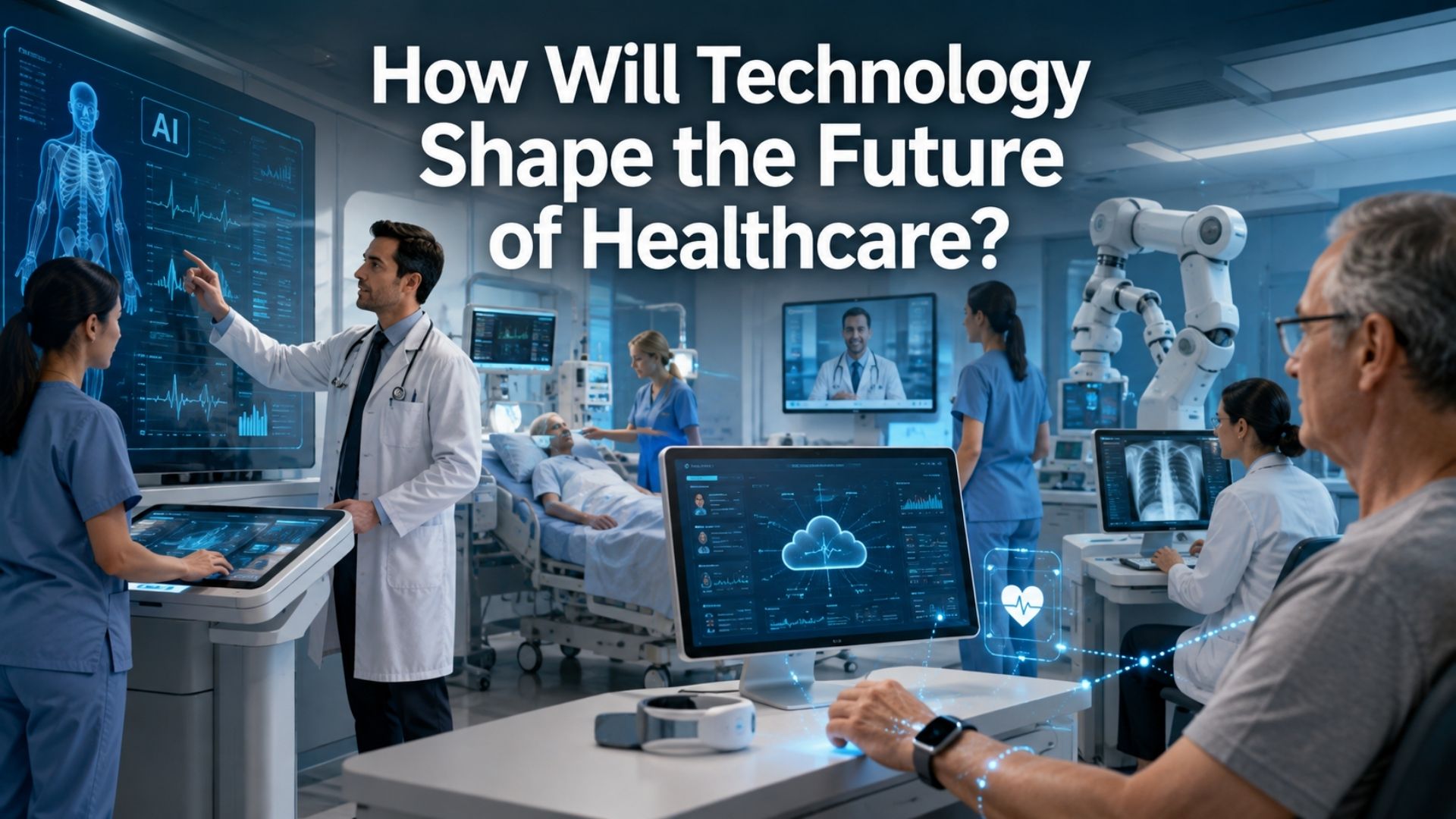
Technology is rapidly changing how healthcare is delivered, managed, and experienced. From artificial intelligence and telemedicine to wearable devices and electronic health records, digital innovations are helping healthcare providers improve efficiency while making care more accessible and personalized.
The ***[future of healthcare](https://medcore.software/blog/future-healthcare/)*** will not depend on a single technology. Instead, different digital solutions will work together to connect patients, healthcare professionals, medical data, and healthcare facilities. This connected approach can help providers make informed decisions, identify health risks earlier, and deliver care beyond traditional hospital settings.
What Role Will Technology Play in Future Healthcare?
Technology will increasingly support healthcare professionals in diagnosis, treatment, communication, administration, and patient monitoring. It can automate repetitive tasks, provide faster access to information, and help healthcare teams manage growing amounts of medical data.
However, technology is most effective when it supports clinical expertise rather than replacing healthcare professionals. Human judgment, empathy, and patient relationships will remain essential to quality healthcare.
1. Artificial Intelligence Will Support Clinical Decisions
Artificial intelligence is becoming an important tool in healthcare. AI systems can analyze large amounts of medical information and identify patterns that may be difficult to detect manually.
In the future, AI could provide greater support for medical imaging, risk prediction, clinical documentation, drug research, and personalized treatment planning. Healthcare professionals can use these insights alongside their expertise to make more informed decisions.
2. Telemedicine Will Expand Access to Care
Telemedicine allows patients to consult healthcare professionals remotely through digital platforms. This can make healthcare more convenient for people who live far from medical facilities or have difficulty attending in-person appointments.
As connectivity and digital healthcare platforms improve, virtual consultations may become an increasingly common part of routine healthcare, particularly for follow-ups, consultations, and certain chronic-care services.
3. Remote Patient Monitoring Will Become More Advanced
Wearable devices and connected medical equipment can continuously collect health information such as heart rate, blood pressure, blood oxygen levels, glucose measurements, and activity data.
Future remote monitoring systems may use AI and analytics to identify unusual patterns and notify healthcare teams when attention may be required. This can support proactive management of chronic conditions and reduce the need for unnecessary hospital visits.
4. Electronic Health Records Will Become More Connected
Electronic health records already help healthcare providers store and access patient information digitally. Future healthcare systems are expected to focus more heavily on interoperability, allowing relevant information to move securely between authorized providers and healthcare organizations.
Better-connected records can reduce information gaps, support continuity of care, and help healthcare professionals access important medical history when making treatment decisions.
5. Personalized Healthcare Will Grow
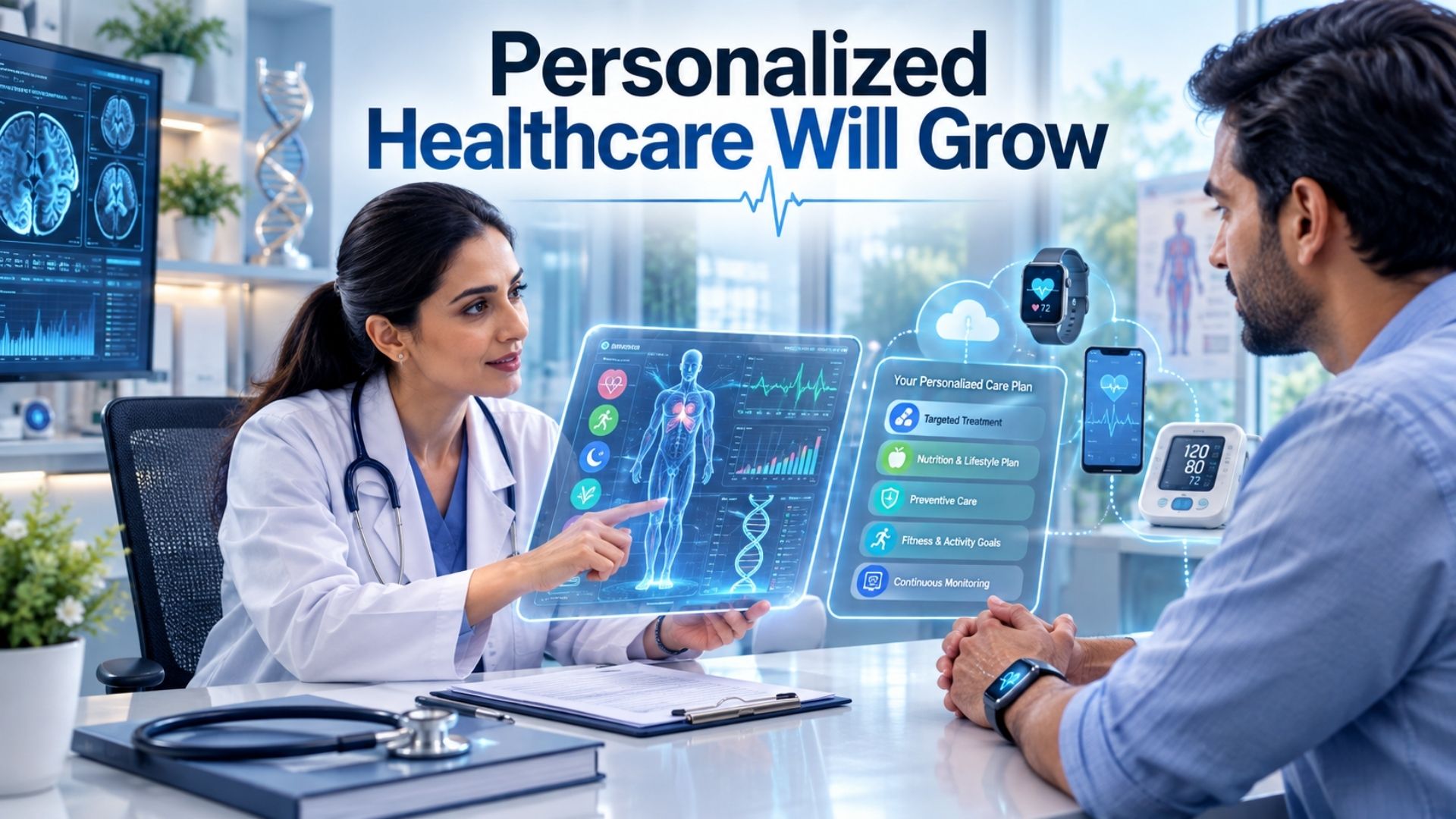
Technology can help providers move toward more personalized healthcare. By analyzing relevant patient information, digital systems can help identify individual risk factors and support treatment approaches based on a patient's specific circumstances.
Personalized healthcare may become increasingly important as providers combine clinical information with data from genetic testing, wearable devices, lifestyle information, and other appropriate sources.
6. Healthcare Automation Will Reduce Administrative Work
Healthcare professionals often spend significant time on documentation, appointment scheduling, billing, data entry, and other administrative activities. Automation can help simplify these repetitive processes.
Intelligent scheduling, automated reminders, digital registration, AI-assisted documentation, and workflow management systems can reduce administrative workloads and allow healthcare teams to focus more attention on patient care.
7. Digital Patient Engagement Will Improve Communication
Patients increasingly expect convenient ways to interact with healthcare providers. Patient portals, healthcare applications, secure messaging, digital appointment systems, and automated notifications can make communication easier.
These technologies can give patients greater access to appointments, medical information, prescriptions, test results, and follow-up instructions while encouraging them to participate more actively in their care.
8. Robotics Will Support Healthcare Services
Robotic technologies are already being used in areas such as surgery, rehabilitation, laboratory automation, and hospital logistics. As robotics continues to develop, these systems may support healthcare professionals with increasingly precise and repetitive tasks.
Robotics can complement human expertise by improving precision, efficiency, and consistency in appropriate healthcare applications.
9. Cloud Technology Will Improve Healthcare Connectivity
Cloud-based healthcare platforms can provide authorized users with access to information and applications across different locations. This can support collaboration between hospitals, clinics, specialists, and patients.
Cloud technology can also help organizations scale digital services and integrate different healthcare applications. Strong security, privacy controls, and appropriate access management remain essential.
10. Predictive Analytics Will Support Preventive Care
Healthcare is gradually moving from reactive treatment toward greater emphasis on prevention. Predictive analytics can analyze healthcare data to identify patterns associated with potential risks.
Providers may use these insights to identify patients who require closer monitoring, support early intervention, and develop more targeted preventive-care strategies.
More efficient clinical workflows
Improved patient engagement
Better remote monitoring
Reduced administrative workload
More personalized care
Improved resource management
Stronger communication between healthcare teams
The actual benefits depend on how effectively technologies are implemented and integrated into existing healthcare workflows.
How Can Healthcare Providers Prepare for the Future?
Healthcare organizations can prepare by identifying their most important operational and clinical challenges before adopting new technologies. Instead of implementing technology simply because it is innovative, providers should select solutions that solve genuine problems and improve patient or staff experiences.
Investing in staff training, secure infrastructure, interoperable systems, data governance, and patient education can also support successful digital transformation.
You can also watch: Everyone is working, but the system is not connected.
Summary
Technology will play a major role in shaping the ***[future of healthcare](https://medcore.software/blog/future-healthcare/)*** by connecting patients, professionals, data, and services more effectively. AI, telemedicine, remote monitoring, electronic health records, automation, personalized care, robotics, cloud platforms, and predictive analytics can improve how healthcare is delivered and managed. At the same time, responsible implementation will be essential to protect privacy, maintain safety, and ensure technology supports rather than replaces human-centered care.
FAQs
1. How will technology change healthcare in the future?
Technology will support more accessible, personalized, connected, and efficient healthcare through AI, telemedicine, remote monitoring, automation, and digital health platforms.
2. Will AI replace doctors in the future?
AI is more likely to serve as a support tool for healthcare professionals. Clinical judgment, empathy, and human decision-making will continue to play an important role.
3. How will telemedicine shape future healthcare?
Telemedicine can make consultations and follow-up care more accessible by allowing patients to communicate with healthcare professionals remotely.
4. What role will wearable devices play in healthcare?
Wearable devices can collect health and activity information and support continuous monitoring, particularly for certain chronic conditions and preventive-care programs.
5. What is the biggest challenge of healthcare technology?
Important challenges include protecting patient data, maintaining cybersecurity, ensuring interoperability, addressing digital access gaps, and using AI responsibly.