How Can Employee Monitoring Improve Workplace Visibility Without Reducing Employee Trust?
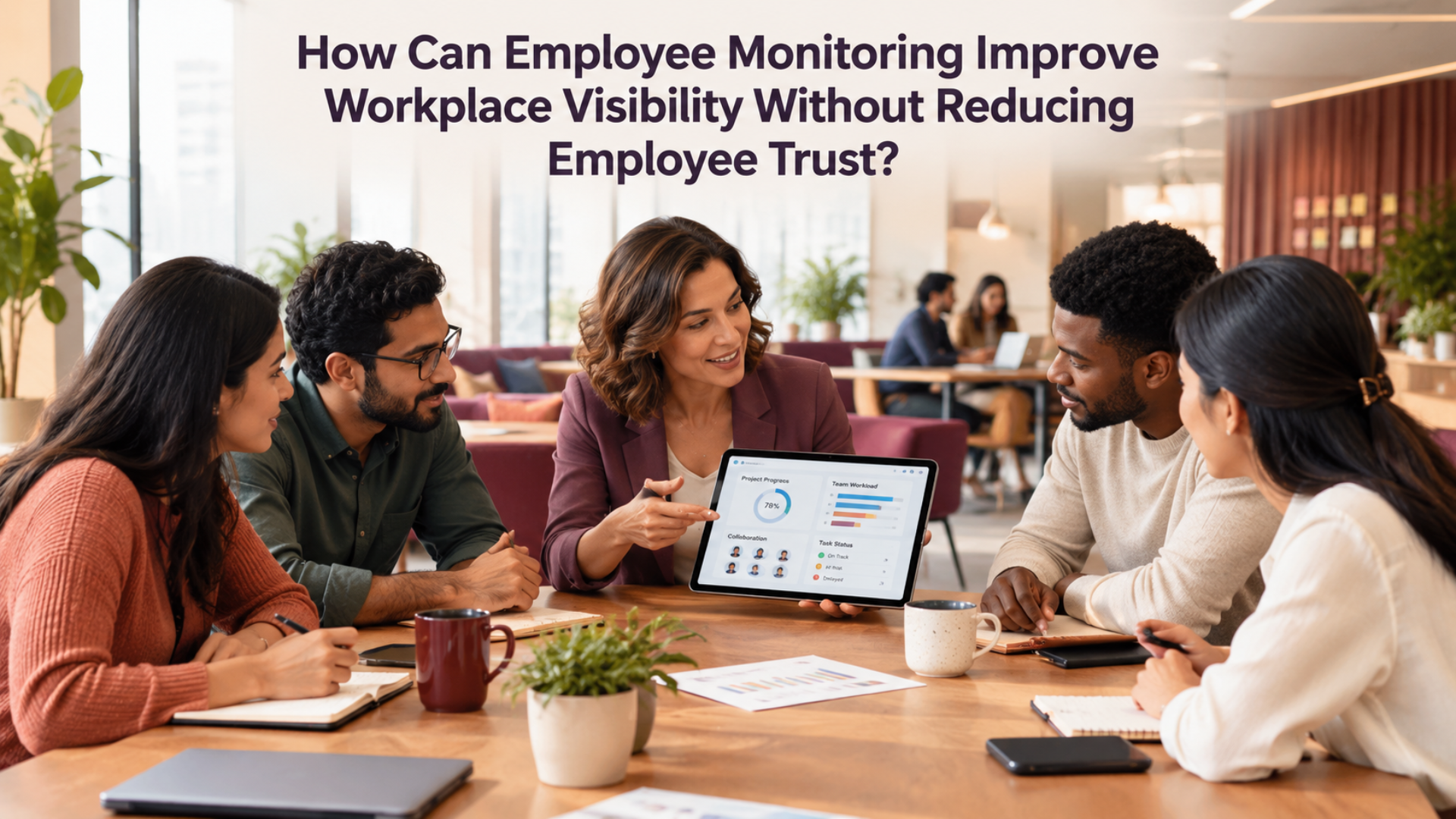
How can businesses understand where work slows down, why deadlines slip, and which processes need improvement without creating an uncomfortable workplace? Employee monitoring can help answer these questions when it is designed around transparency, useful insights, and clear business objectives rather than constant observation.
The most effective approach focuses on work patterns instead of personal surveillance. By analyzing application usage, workflow activity, task progress, and collaboration trends, organizations can identify operational gaps while giving employees clarity about what information is collected and why.
What Does Employee Monitoring Actually Help Businesses Understand?
Workplace visibility is not simply about knowing whether someone is active at a particular moment. It is about understanding how work moves through an organization.
A thoughtful ***[Employee monitoring](https://empcloud.com/blog/employee-monitoring-and-productivity-tracking-2026-smb-list/
)*** program can help leaders identify:
* Where repetitive tasks consume valuable time
* Which workflows create unnecessary delays
* Whether workloads are distributed fairly
* Where remote teams experience coordination challenges
* Which processes could benefit from automation
* How employees interact with essential workplace tools
This information gives managers a broader operational picture. Instead of relying entirely on assumptions or occasional status updates, they can use measurable patterns to understand how everyday processes function.
How Can Better Visibility Improve Workflow Decisions?
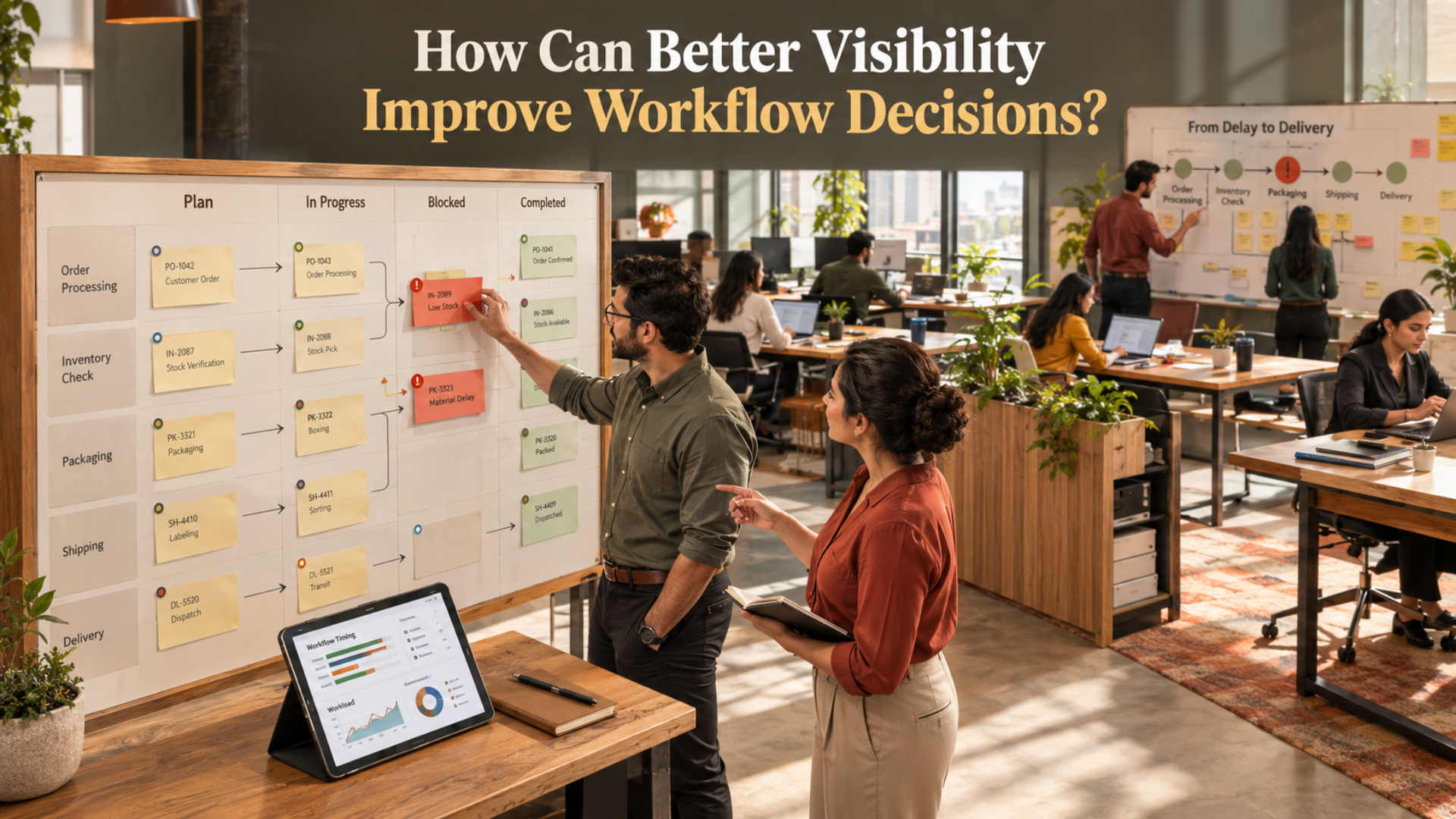
Many workplace problems are difficult to recognize from individual performance reports. A project may appear delayed because of employee productivity when the real issue is an inefficient approval process, excessive application switching, unclear responsibilities, or insufficient resources.
This is where data becomes useful.
Managers can examine patterns across teams and processes to determine whether an issue is isolated or recurring. For example, repeated delays during a particular stage of a project may indicate a process problem rather than an individual performance issue.
This distinction matters because the solution changes accordingly.
Instead of immediately increasing pressure on employees, organizations can consider:
1. Removing unnecessary approval steps.
2. Automating repetitive administrative work.
3. Reallocating workloads between teams.
4. Improving communication between departments.
5. Providing additional training where genuine skill gaps exist.
These decisions make monitoring information more valuable because the objective becomes improving the way work is organized, not simply measuring activity.
What Management Strategies Make Monitoring More Effective?
Successful workplace visibility requires clear ***[management strategies](https://medium.com/@cloudvision14/top-management-strategies-every-organization-should-implement-28de5311f02c
)***. Technology alone cannot create a productive monitoring environment. Leaders need to establish expectations before collecting meaningful workplace data.
A responsible framework should include:
Define the purpose
Employees should understand why monitoring is being introduced. Whether the objective is workflow improvement, security, resource planning, or operational analysis, the purpose should be specific.
Focus on useful signals
Not every available metric deserves attention. Organizations should prioritize information that can support genuine business decisions rather than collecting excessive data simply because technology makes it possible.
Explain data practices
Employees should know what information is collected, how it is used, who can access it, and how long it is retained. Clear communication can reduce uncertainty and strengthen confidence in the process.
Evaluate context
A single metric rarely explains an employee's complete contribution. Managers should consider project complexity, collaboration, customer requirements, creative work, and other factors that may not appear in activity data.
Review the approach regularly
Monitoring programs should evolve as workplace needs change. Organizations can periodically assess whether collected information is still necessary and whether it is producing useful outcomes.
How Can Monitoring Support Remote and Hybrid Teams?
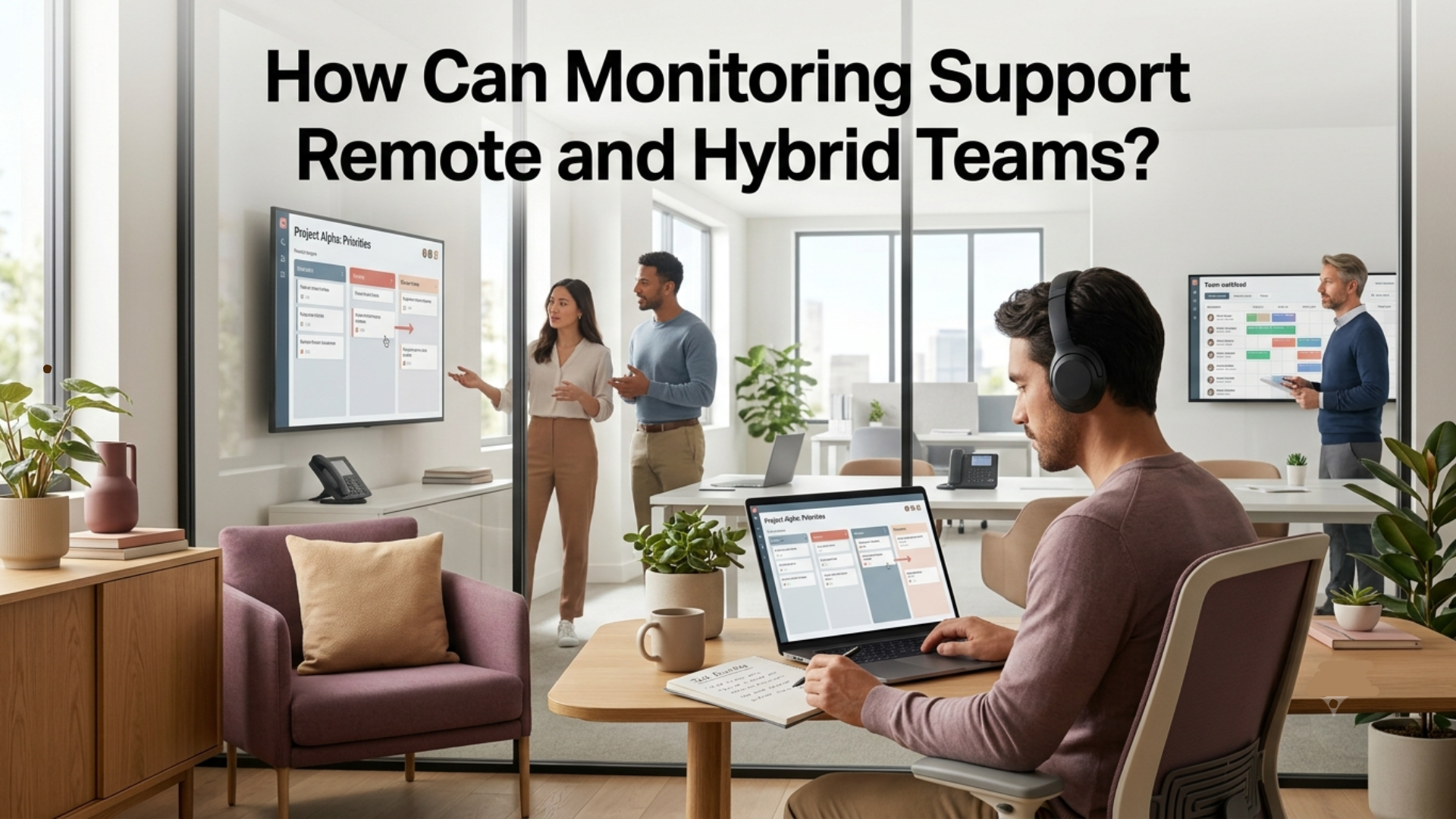
Distributed teams often face a different visibility challenge. Managers may not have the same informal interactions that occur in a traditional office, making it harder to recognize workflow obstacles.
Well-designed monitoring can provide additional operational context without turning remote work into constant supervision.
For example, aggregated activity patterns can reveal whether employees are struggling with excessive meetings, inefficient tools, fragmented workflows, or uneven workloads. Managers can then address the underlying issue rather than assuming that reduced visible activity means reduced commitment.
This approach also helps organizations compare workflows across locations while maintaining reasonable boundaries around employee privacy.
Why Is Context More Important Than Individual Metrics?
A common mistake is treating every measurable activity as an indicator of productivity. Time spent in an application, keyboard activity, login duration, or online status may provide useful context, but none should automatically become a complete measure of performance.
A person may spend less time actively typing while producing high-value strategic work. Another employee may appear highly active while spending considerable time correcting inefficient processes.
For that reason, monitoring data should be combined with:
* Project outcomes
* Quality of completed work
* Customer or stakeholder feedback
* Team collaboration
* Meeting responsibilities
* Deadlines and milestones
* Employee development
This broader perspective creates a more balanced understanding of workplace contribution.
How Can Performance Management Benefit From Better Workplace Data?

When monitoring information is used responsibly, ***[performance management](https://empcloud.com/blog/performance-management-process/
)*** can become more evidence-based and constructive.
Instead of relying only on subjective impressions, managers can use operational patterns to guide conversations about workload, resources, workflow challenges, and development needs. The goal should be to identify opportunities for improvement rather than automatically penalize unusual activity.
For instance, if an employee repeatedly encounters delays because of inefficient software or unclear processes, the appropriate response may involve better tools or process redesign. If a team consistently struggles with workload distribution, managers can reconsider staffing or scheduling.
This turns workplace data into a decision-support resource rather than a disciplinary mechanism.
What Should Businesses Avoid?
Organizations should avoid several practices that can undermine the value of a monitoring program:
* Secretive data collection
* Excessive monitoring without a clear purpose
* Ranking employees using isolated metrics
* Treating activity as a direct measure of productivity
* Ignoring employee concerns
* Retaining unnecessary information
* Using monitoring data outside its stated purpose
The technology should support better decisions, not replace managerial judgment.
You can also watch: ***[The Future of Work | Top Industry Insights & HR Strategies (Coming Soon) ](https://youtu.be/6qMFnjAwYgw?si=LGBmxDVfTsifnrMt
)***
Summary
Workplace visibility becomes valuable when ***[Employee monitoring](https://empcloud.com/blog/employee-monitoring-and-productivity-tracking-2026-smb-list/
)*** helps organizations understand processes, remove bottlenecks, balance workloads, and improve collaboration. The strongest approach combines data with transparency, context, employee communication, and responsible leadership.
Frequently Asked Questions
Is workplace monitoring the same as employee surveillance?
No. Monitoring can focus on workflow and operational patterns, while intrusive surveillance may focus excessively on individual behavior. The difference depends largely on purpose, transparency, and how data is used.
Can monitoring improve productivity?
It can help identify workflow obstacles, repetitive tasks, resource gaps, and process inefficiencies that prevent employees from working effectively.
Should businesses monitor every employee activity?
No. Organizations should collect only information that has a clear and legitimate business purpose.
How can companies maintain employee trust?
Clear policies, transparent communication, appropriate data limits, contextual evaluation, and consistent privacy practices can help create a more trustworthy approach.