# Inbound vs Outbound AI Calling: Key Differences Explained
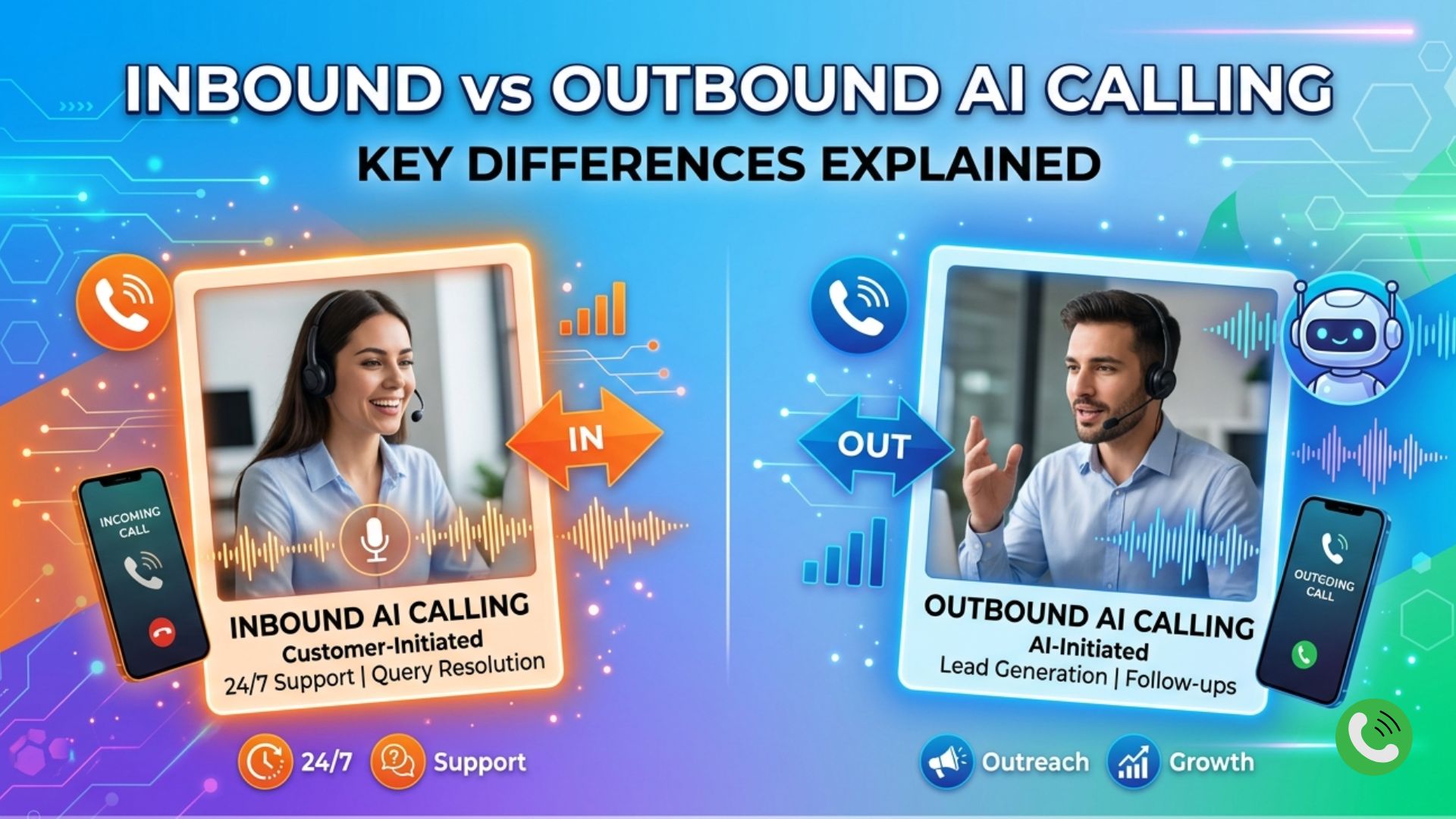
What is the real difference between inbound and outbound AI calling, and which approach is better for a growing business? The answer depends largely on whether a company wants to respond to existing customer interest or proactively reach prospects.
***[AI Calling](https://callified.ai/blog/the-ai-calling-pilot-sprint/)*** uses artificial intelligence to automate or assist business phone conversations, helping companies manage customer inquiries, qualify leads, schedule appointments, provide information, and support sales teams. The main distinction is simple: inbound calling handles conversations initiated by customers, while outbound calling starts conversations with customers or prospects.
Understanding this difference is important because each approach serves a different business objective. Choosing the right model can improve response times, reduce repetitive work, and create a more consistent calling experience.
**What Is Inbound AI Calling?**
Inbound calling focuses on conversations that begin when a customer or prospect contacts a business. Instead of requiring a human agent to answer every routine question, an AI-powered system can handle initial interactions and determine what should happen next.
For example, an inbound system can:
* Answer frequently asked questions
* Identify the reason for a call
* Collect customer information
* Check appointment availability
* Route complex conversations to human agents
* Provide order or service information
* Capture messages outside business hours
This makes inbound automation particularly useful for businesses that receive a high volume of repetitive calls.
**What Is Outbound AI Calling?**
Outbound calling works in the opposite direction. Instead of waiting for a customer to initiate contact, the business or its automated system reaches out proactively.
This approach can support lead qualification, appointment reminders, customer follow-ups, surveys, renewals, and sales campaigns. It is especially useful when teams need to contact large numbers of prospects without manually making every call.
For sales teams, ***[outbound sales calls](https://callified.ai/blog/outbound-sales-calls-conversions/)*** can become more organized when automated workflows handle initial conversations and identify which prospects deserve personal attention.
**Inbound vs Outbound AI Calling: Key Differences**
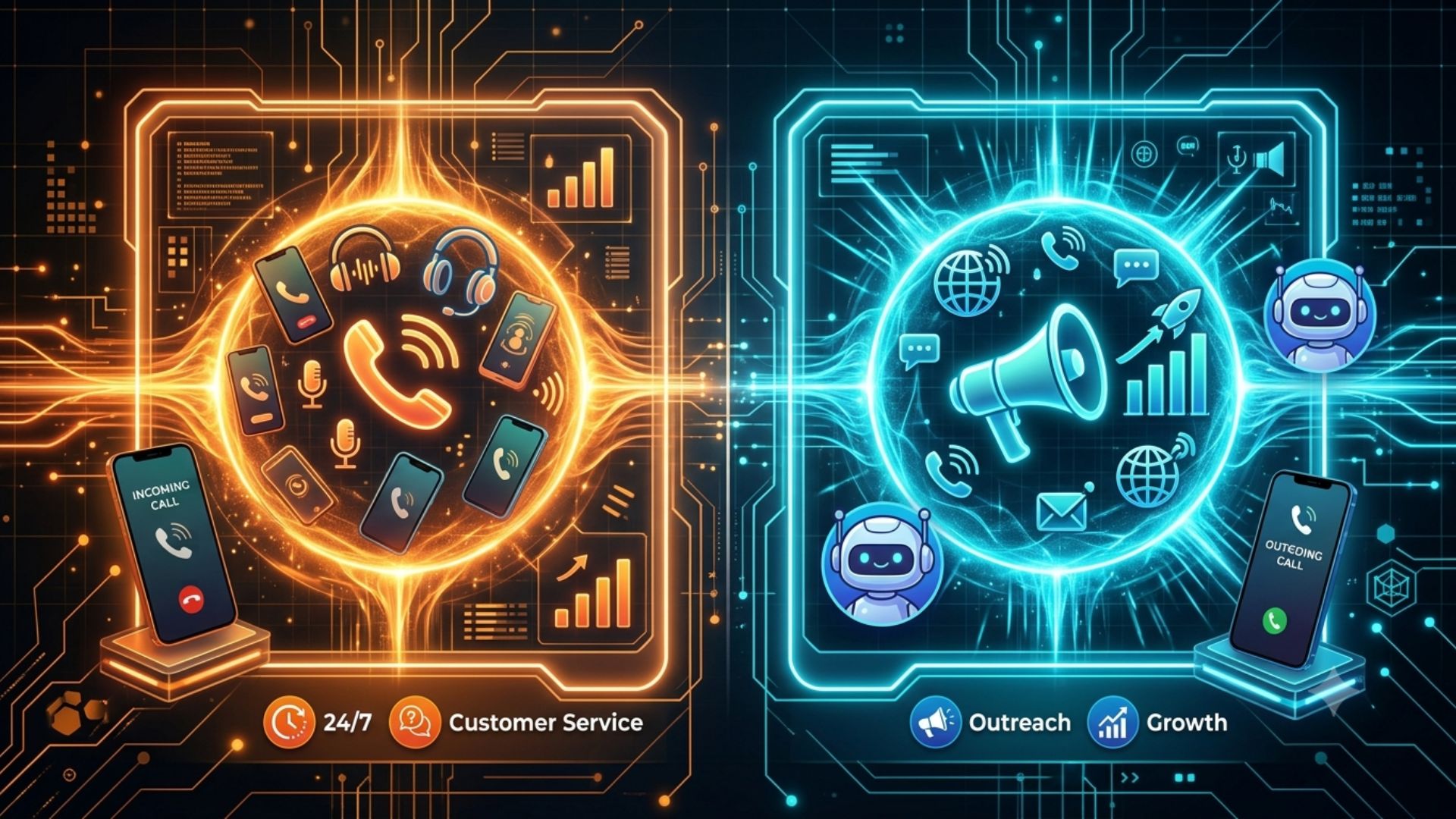
* Call Direction: Inbound AI calling handles calls initiated by customers, while outbound AI calling starts conversations with prospects or customers.
* Primary Purpose: Inbound calling mainly focuses on customer support, assistance, and issue resolution. Outbound calling is commonly used for sales, lead qualification, follow-ups, and outreach.
* Customer Interaction: Inbound systems respond to existing customer needs, whereas outbound systems proactively engage potential or existing customers.
* Common Use Cases: Inbound calling can manage FAQs, appointment requests, support inquiries, and call routing. Outbound calling can handle lead qualification, reminders, surveys, re-engagement, and sales outreach.
* Main Business Goal: Inbound calling aims to improve response times and customer experience. Outbound calling focuses on generating opportunities and maintaining proactive communication.
* Workflow: Inbound calls typically begin with customer intent and move toward resolution or agent transfer. Outbound calls usually follow predefined campaigns, contact lists, scripts, and qualification criteria.
* Success Metrics: Inbound performance can be measured through resolution rate, response time, and customer satisfaction. Outbound performance may be measured through contact rates, qualified leads, appointments, and conversions.
* Best Fit: Inbound AI calling is ideal for businesses with high volumes of customer inquiries. Outbound AI calling is better suited to businesses focused on prospecting, sales development, and structured follow-ups.
* Human Agent Involvement: Inbound AI can transfer complex customer issues to the appropriate agent. Outbound AI can identify promising prospects and pass qualified opportunities to sales representatives.
* Can They Work Together? Yes. Businesses can combine both approaches to manage incoming customer requests while proactively following up with leads and customers.
**When Should a Business Use Inbound Calling?**
Inbound calling is generally a strong option when customers frequently contact the business for predictable reasons.
It can be particularly valuable for organizations dealing with:
* High call volumes
* Repetitive customer questions
* Appointment-based services
* Technical or product support
* After-hours inquiries
* Large customer-service workloads
For instance, a service company could allow an automated caller to collect customer details and determine the type of assistance required before transferring the conversation to a specialist.
This approach can reduce pressure on customer service teams while maintaining a consistent first point of contact.
**When Is Outbound Calling the Better Choice?**
Outbound calling is more suitable when the business needs to actively create or advance opportunities.
Consider outbound automation when the goal is to:
* Contact a large prospect database.
* Qualify potential buyers.
* Follow up with leads quickly.
* Remind customers about upcoming actions.
* Reconnect with inactive prospects.
* Support structured sales campaigns.
Speed can be particularly important in lead management. When follow-ups are delayed, prospects may lose interest or move toward competing solutions. Automated workflows can help businesses maintain consistent contact without requiring employees to manually initiate every interaction.
**Can Businesses Combine Both Approaches?**

Yes. In many cases, combining inbound and outbound automation creates a more complete customer communication strategy.
A business might use inbound automation to answer questions and qualify callers while using outbound workflows to follow up with promising prospects. Information collected during one interaction can also help inform future conversations.
This creates a connected customer journey rather than treating support, marketing, and sales calls as separate activities.
Modern platforms such as Callified AI can help businesses build structured calling workflows around lead engagement, customer communication, qualification, and follow-up processes.
**How Does AI Calling Support Sales and Marketing?**
Calling automation becomes more valuable when it works alongside customer data, CRM workflows, campaign management, and other business systems. The broader role of ***[AI for sales and marketing](https://forums.siliconera.com/threads/which-ai-for-sales-and-marketing-tools-deliver-the-best-roi.167496/)*** is to reduce repetitive activities while helping teams focus their time on conversations that require human judgment.
For example, an automated workflow can identify a prospect's basic requirements, record the conversation outcome, update relevant information, and trigger a follow-up task. A sales representative can then enter the conversation with useful context instead of starting from scratch.
The key is to treat automation as a support layer rather than simply a replacement for human communication. Complex negotiations, sensitive customer issues, and high-value relationships may still benefit from direct human involvement.
**How to Choose Between Inbound and Outbound Calling**
The right approach depends on the business objective.
Choose inbound when the priority is:
* Faster customer response
* Automated support
* Call routing
* Handling repetitive inquiries
* Improving service availability
Choose outbound when the priority is:
* Lead generation
* Prospect qualification
* Follow-up
* Appointment setting
* Customer re-engagement
Businesses with both high customer demand and active sales operations may benefit from using both models together.
Also watch this video - ***[Meet Callified AI | Your AI Sales Team That Never Sleeps](https://youtu.be/cQ8QsephGKI?si=zPMCc1XGaWJJboY2)***
**Conclusion**
The key difference between inbound and outbound calling is who starts the conversation and what the business is trying to accomplish. Inbound systems emphasize responsiveness and service, while outbound systems focus on proactive engagement and opportunity creation. A well-planned ***[AI Calling](https://callified.ai/blog/the-ai-calling-pilot-sprint/)*** strategy can combine both approaches to improve efficiency, strengthen customer interactions, and help teams spend more time on conversations that genuinely require human expertise.
**Frequently Asked Questions**
Q1. Is inbound or outbound calling better?
Neither is universally better. Inbound is generally stronger for customer support and response management, while outbound is better suited to proactive outreach and lead engagement.
Q2. Can outbound calling qualify leads automatically?
Yes. Automated workflows can ask predefined questions, capture responses, identify basic qualification criteria, and route suitable opportunities to sales representatives.
Q3. Can inbound and outbound calling work together?
Yes. Combining both approaches can create a connected customer journey where incoming inquiries, follow-ups, qualification, and support work together.
Q4. Does automated calling replace human agents?
Not necessarily. The most effective approach often uses automation for repetitive interactions while allowing human representatives to handle complex, sensitive, or high-value conversations.